Making Christmas Decorating Pet-Friendly: A Guide for Cat & Dog Parents
Decorating for Christmas is one of the most exciting traditions of the season. However, when you share your home with pets, particularly curious cats or playful dogs, the process requires a little extra thought and care. As a professional with a BSc in Animal Behaviour and Training, I’ve worked with many pet parents navigating the holiday season, and I understand the challenges of balancing festive fun with a safe, stress-free environment for your furry family members.
From toppling trees to chewed cords, Christmas decorations can spell trouble for our pets. Cats often see the tree as the ultimate climbing structure, complete with dangling ornaments to bat at or chew on. Dogs, on the other hand, may sniff, paw, or even try to eat festive decorations or treats. With a bit of planning and insight into animal behavior, you can create a beautiful holiday display while keeping your pets happy and safe.

Why Decorations Can Be Stressful for Pets
For cats and dogs alike, the sudden introduction of new objects, scents, and sounds can be overwhelming. Cats, who are highly territorial and sensitive to change, may react to a Christmas tree as an invasion of their space. Dogs, with their keen noses and playful energy, may see the shiny ornaments, garlands, and wrapped presents as new toys to explore—or worse, taste!
It’s important to remember that what we see as festive, they might see as disruptive or even threatening. Understanding their perspective helps us take proactive steps to make the holiday season enjoyable for everyone.
Making Your Christmas Tree Pet-Friendly
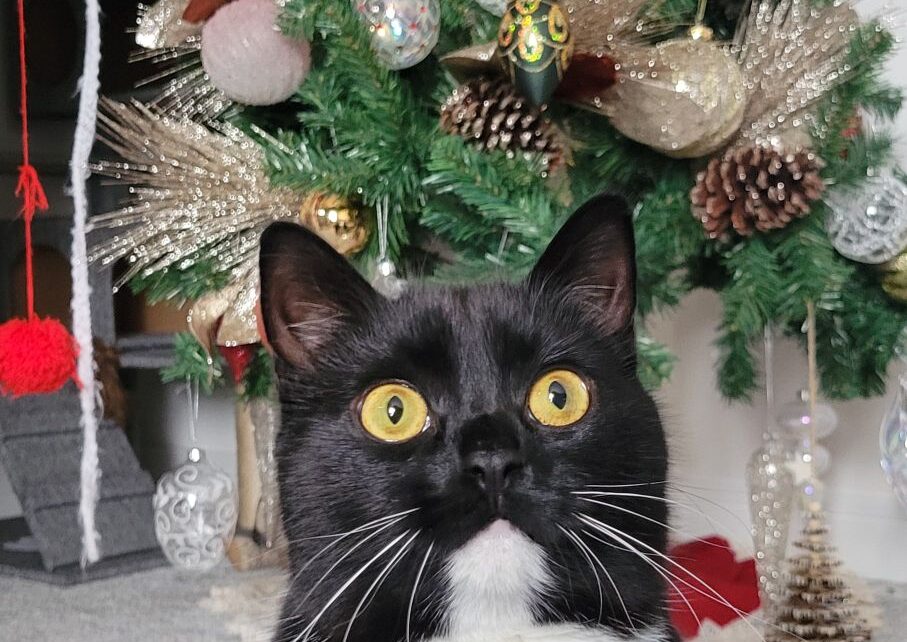
The Christmas tree often becomes the centerpiece of holiday decorating, and it’s also the most common source of pet-related mishaps. Cats might climb or knock over the tree, while dogs can chew on ornaments or drink the tree water. Here’s how to make your tree safer for your pets:
Step 1: The Naked Tree Phase
Start by setting up the tree without any decorations. This step serves a dual purpose: it allows your pets to satisfy their initial curiosity and gives you a chance to observe their behavior.
For cats, this phase is particularly important. They’re natural climbers, and introducing a bare tree first lets them explore without risking damage to fragile ornaments or tangling in lights. Dogs, on the other hand, can use this phase to get accustomed to the tree’s presence without the temptation of shiny or scented decorations.
Pro Tip: To discourage climbing or chewing, lightly spray the base of the tree with a mix of orange essential oil diluted in alcohol. This specific mixture is effective because it leaves behind only the scent once it dries, unlike water-based sprays, which can leave residue that pets may lick or ingest. Avoid using dried orange peels or water-diluted orange solutions, as these can tempt pets to chew or eat them instead.
Step 2: Gradual Decoration
Once your pets have acclimated to the tree, it’s time to decorate—slowly. Start with non-hazardous items like soft fabric ornaments or ribbons that won’t break if they fall. Add lights next, ensuring the wires are secured tightly to prevent chewing or entanglement. Fragile ornaments and items that could shatter or splinter should go on last and be placed higher up, out of reach.
Avoid using tinsel altogether; it’s particularly dangerous if swallowed, especially for cats, as it can cause intestinal blockages. If you’re a fan of shiny garlands, consider using fabric or paper alternatives that are safer for pets.
Keeping the Rest of Your Decorations Safe
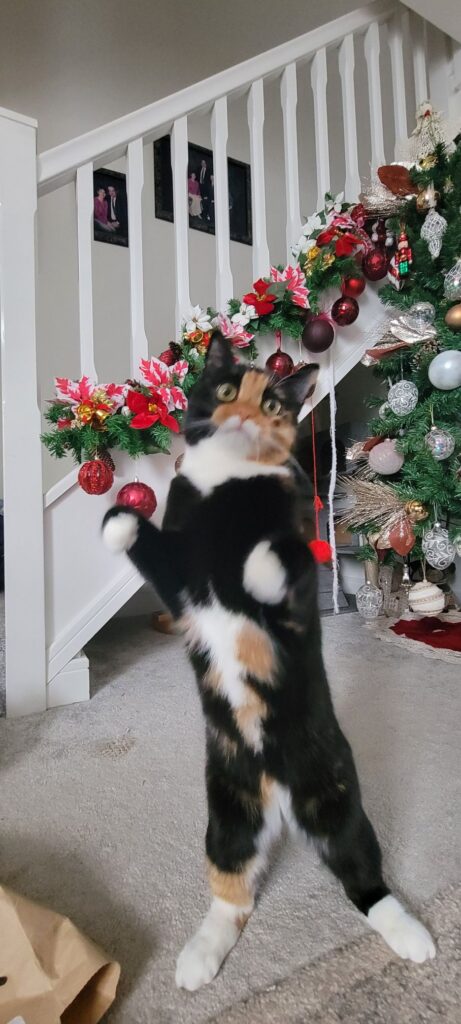
Beyond the tree, other decorations can also pose risks. Dogs are often drawn to edible decorations, such as gingerbread ornaments, popcorn garlands, or wrapped gifts with scented treats. Cats, meanwhile, may be enticed by dangling ribbons or bells.
To minimize risks:
- Secure Decorations: Use adhesive hooks or sturdy stands to keep decorations stable.
- Hide Cords: Use chew-proof covers to prevent accidents with electrical wires.
- Limit Access: If possible, create pet-free zones for particularly fragile or hazardous decorations.
Helping Pets Cope with the Holiday Season
It’s not just the decorations that can stress pets—holiday chaos itself can be overwhelming. Cats may become reclusive, and dogs might display signs of anxiety, such as pacing, barking, or destructive behavior.
For Cats
Cats are highly territorial, so maintaining a sense of normalcy in their environment is key. Create “safe zones” away from the tree and decorations where they can retreat to familiar bedding or perches. Providing vertical spaces, like cat trees or shelves, can also help them feel secure.
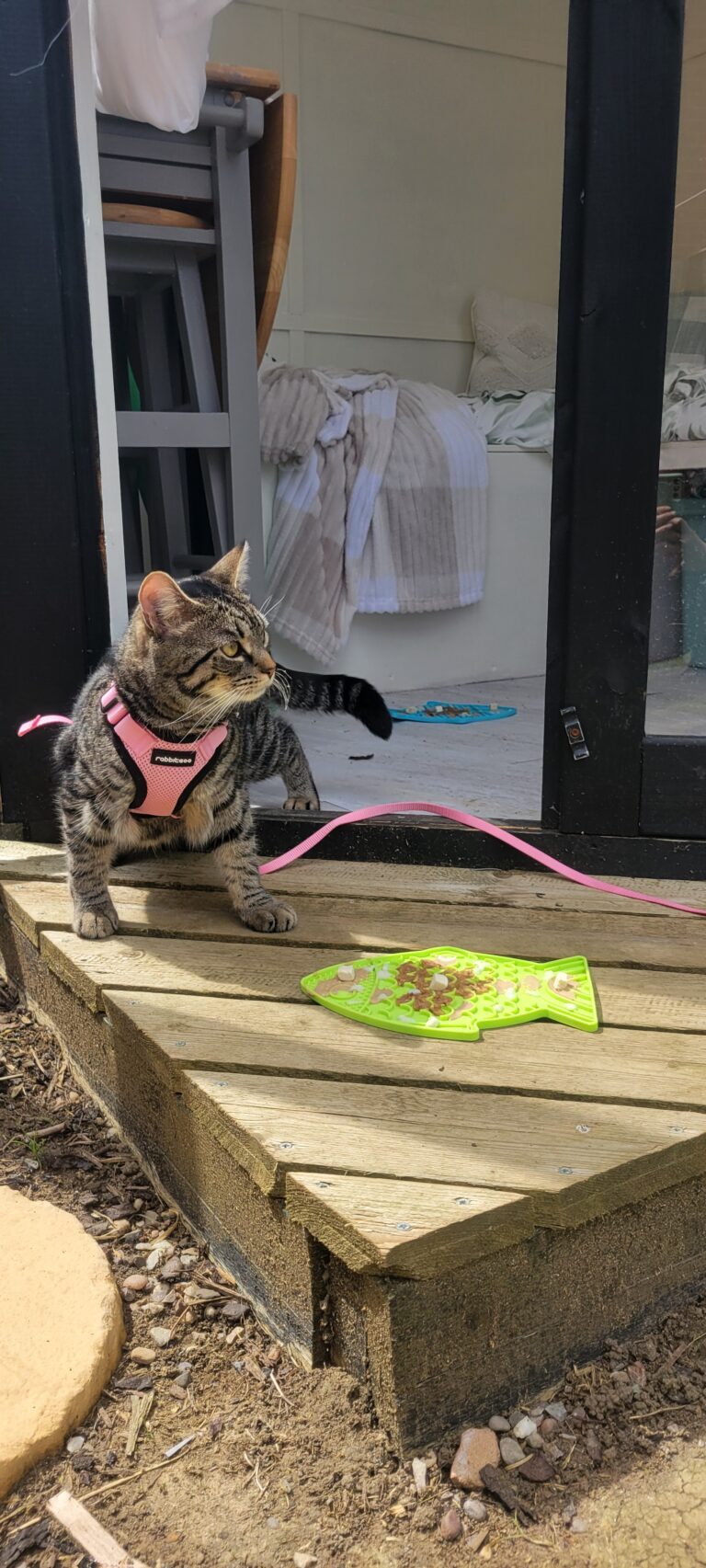
Interactive toys or puzzle feeders can redirect their attention from the decorations to a more appropriate outlet for their energy.
For Dogs
Dogs thrive on routine, so try to stick to their regular schedule for meals, walks, and playtime. If your dog is particularly energetic, a long walk or play session before introducing them to new decorations can help burn off excess energy.
For dogs prone to anxiety, consider using calming aids such as pheromone diffusers, anxiety vests, or even soothing background music. Puzzle toys or long-lasting chews can provide mental stimulation and keep them occupied.
Signs Your Pet Is Adjusting Well
A happy, stress-free pet will:
- Relax in familiar spots rather than hiding or pacing.
- Continue eating, sleeping, and playing as usual.
- Show decreasing interest in the tree and decorations.
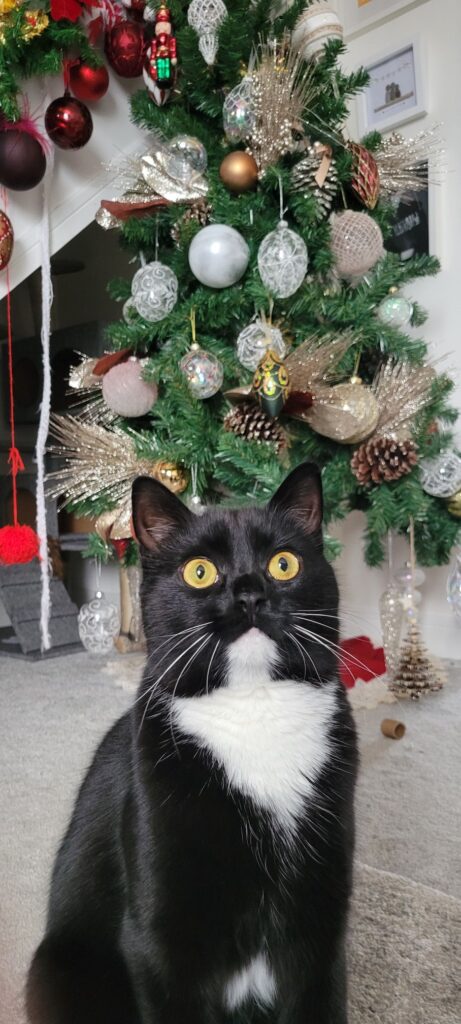
If you notice persistent signs of stress—such as excessive hiding, destructive behavior, or changes in appetite—it may be time to consult with a professional for tailored advice.
A Final Word on Pet Safety
The holiday season should be enjoyable for every member of the family, including your pets. By taking a gradual and thoughtful approach to decorating, and by using tools like alcohol-diluted orange sprays for aversion, you can maintain a beautiful festive atmosphere without compromising your pets’ well-being.
As a professional with a BSc in Animal Behaviour and Training, I’m here to help pet parents navigate challenges like holiday safety and beyond. If you need additional guidance tailored to your pet’s unique needs, don’t hesitate to reach out. Together, we can make this holiday season safe, festive, and stress-free for everyone in your home.