The Complete Guide to Muzzle Training: Benefits, Materials, and Proper Fit
When you see a dog wearing a muzzle, it is easy to make assumptions. But a muzzle tells you very little about that dog’s personality, or why they are wearing it. They might need help avoiding unsafe things on walks, extra precautions during veterinary care, or support as part of a behaviour plan.
At Ellie’s Animal Academy, we see muzzle training as a useful life skill. Teaching a dog to feel comfortable wearing one before it is needed gives you more options if their circumstances change. The aim is to introduce it gradually, choose a suitable design and make comfort a priority.
This guide covers why muzzle training can help, our experience with Jett, how to compare materials, what a good fit looks like and how to get started.
Why muzzle training can be useful
Even a friendly, sociable dog can react differently when frightened or in pain. A familiar muzzle can remove one unfamiliar element from an already difficult situation. Other dogs may need one more regularly as part of their everyday management.
| Situation | How a suitable muzzle may help |
|---|---|
| Veterinary care and first aid | Adds a precaution against bites when necessary handling is difficult or painful. Discuss its use with your veterinary team. |
| Behaviour support | Can reduce bite risk alongside careful management and training that addresses how the dog feels. |
| Scavenging on walks | A suitable design may help prevent access to harmful items. An ordinary open basket may still allow a dog to pick things up. |
| Necessary grooming or handling | May form part of an agreed handling plan. It should not be used to push through distress or avoid investigating pain. |
| Travel or other specific requirements | Being comfortable in a muzzle helps if your journey or destination requires one. Check the relevant requirements before travelling. |
A muzzle does not treat fear, frustration or pain. A dog who finds an encounter worrying still needs space and support while wearing one. It is not a reason to arrange close greetings, take them into a crowd or continue handling they cannot cope with.
What Jett taught us about comfort and fit
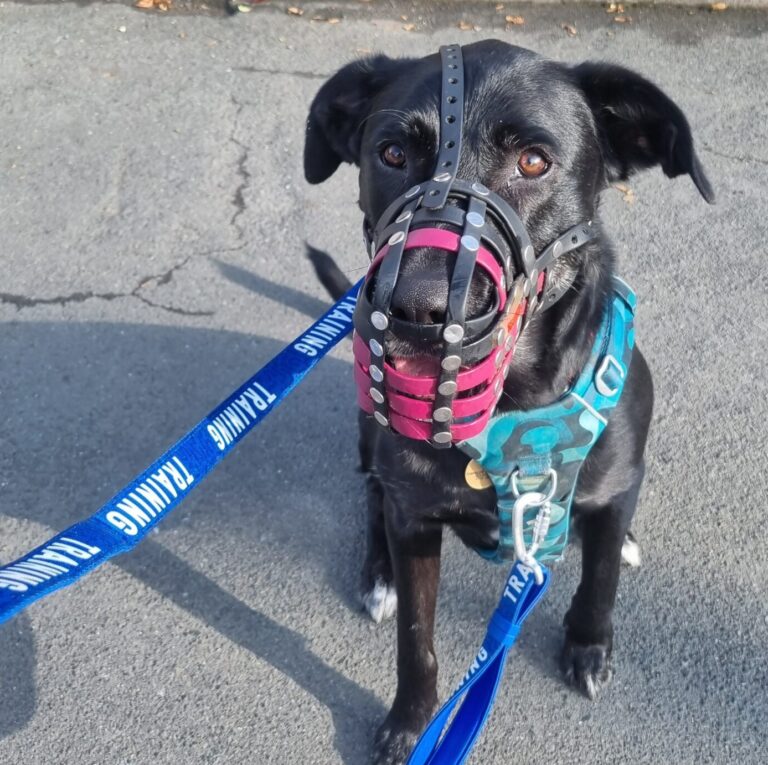
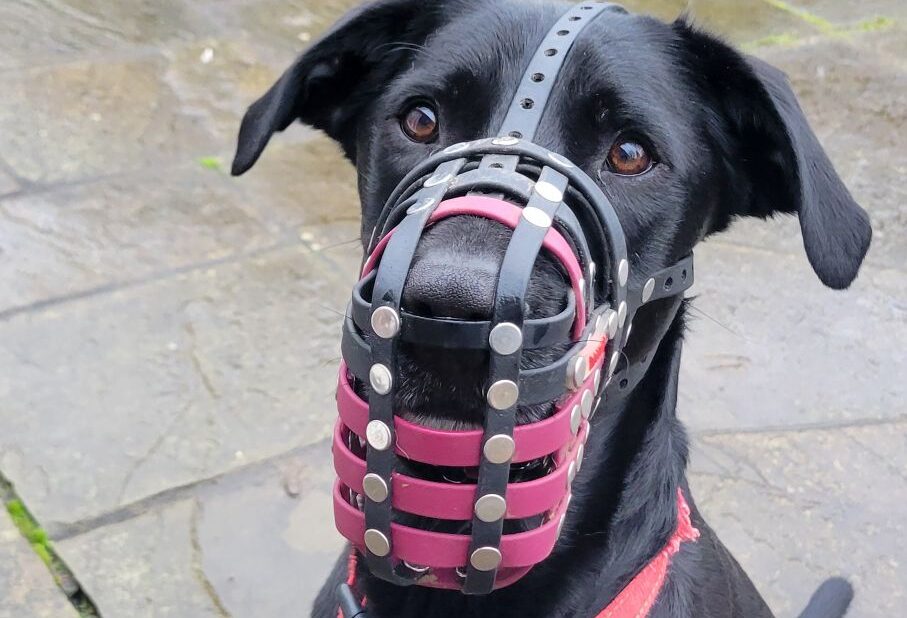
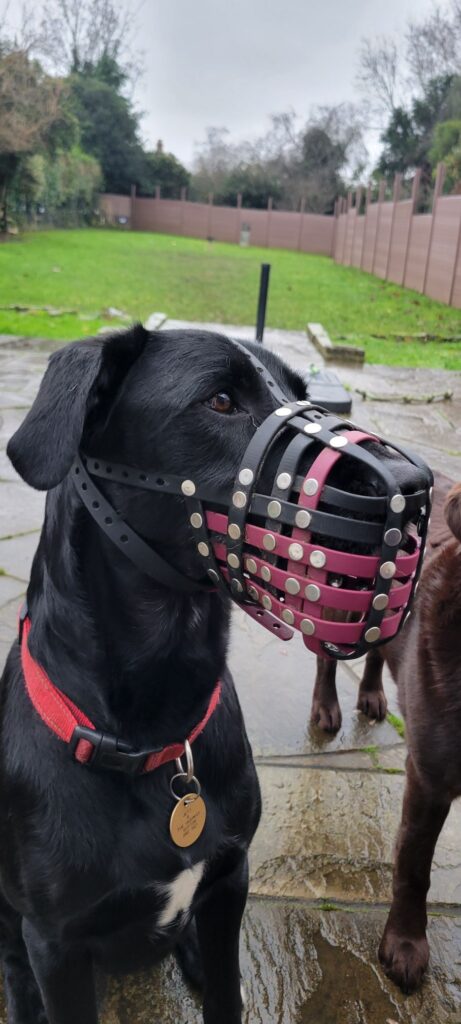
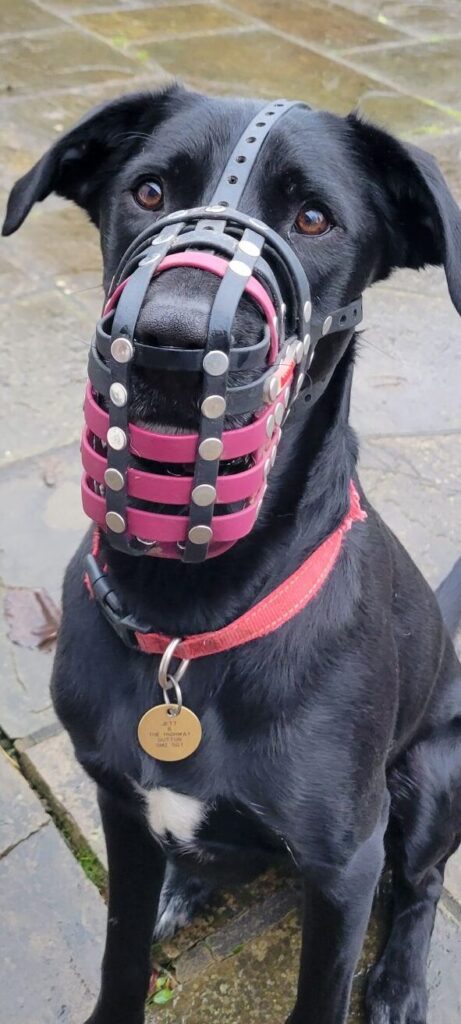
Our experience with Jett showed us how much the individual fit matters. His head shape made finding a suitable muzzle more complicated, so we explored custom options and found Truffle Muzzles.
Jett also has a sensitive nose. The leather muzzle we had been using irritated the soft part of it, and he would rub or bash his face against our legs to move it and relieve the irritation. He was also reluctant to put it on.
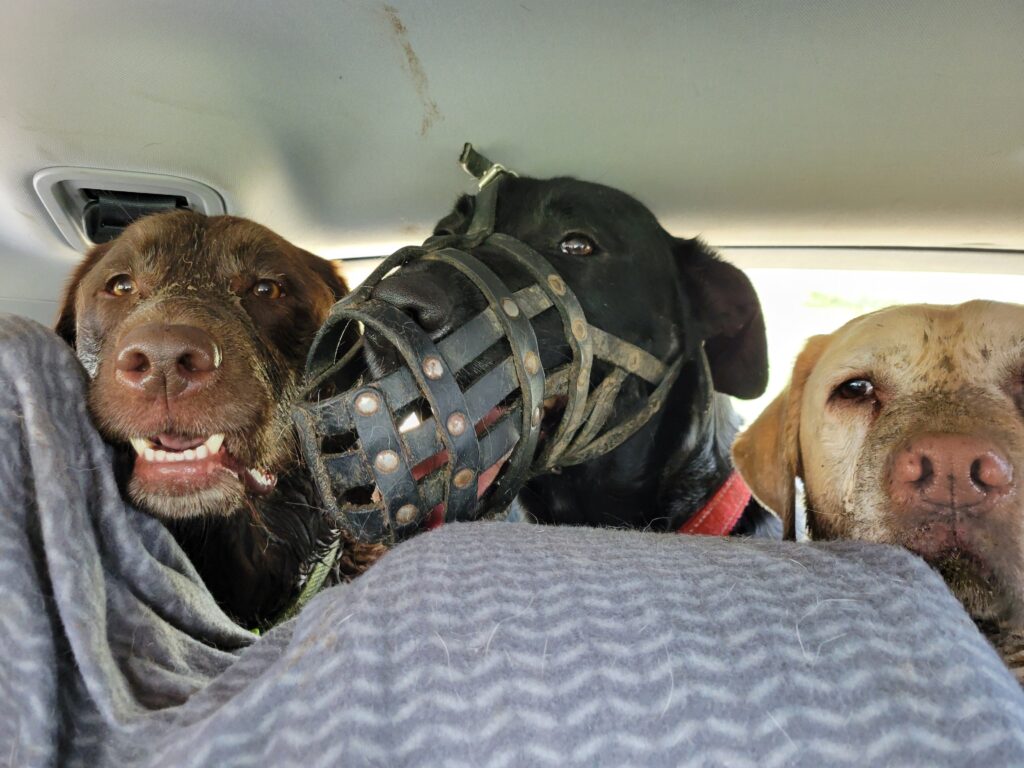
With a different design that kept pressure away from that sensitive area, he rubbed against us much less and became more willing to place his nose inside. That change was a useful reminder: reluctance is information. Before assuming a dog simply needs more practice, we need to check whether the equipment is comfortable.
The fitting process involved detailed measurements, considering his sensitivities, choosing the material and adjusting the fit. We wanted room for him to pant, drink and take treats while moving comfortably.
This is our experience with one dog and one design. A custom muzzle still needs to suit its intended purpose. Truffle Muzzles explains that its flexible BioThane muzzles can fold and may allow a determined dog to bite. Improved comfort does not, by itself, establish suitability for managing bite risk.
Choosing a muzzle: design matters as much as material
Start with what you need the muzzle to do, then consider its shape, construction and fit. Two muzzles made from the same material can differ considerably in strength, flexibility, ventilation and the size of their openings.
For walks and training, look for a basket design with enough room for a full pant. A close-fitting fabric muzzle that holds the mouth shut is a different type of equipment and is unsuitable for exercise.
| Material or type | Practical benefits | Points to check |
|---|---|---|
| Leather basket | Available in different constructions, including more open baskets. Some designs can be adjusted. | Weight, ventilation and rigidity vary. Leather can rub and is not automatically better for sensitive skin. Follow the maker’s cleaning and conditioning advice. |
| BioThane basket | Coated webbing is easy to wipe clean and is available in custom sizes and colours. | Flexible straps may deform under pressure. Do not assume a BioThane basket will prevent a determined bite. Check the maker’s stated limitations. |
| Plastic or rubber basket | Often easy to clean, with a range of ready-made shapes and sizes. | Rigid plastic and flexible rubber are not interchangeable. Check construction, pant space, openings and suitability for the intended use. Inspect for splits and damage. |
| Wire basket | A rigid, open basket may offer substantial pant space and ventilation when correctly fitted. | Check weight, nose padding, basket openings and strap security. A dog can still injure someone by striking them with the muzzle. |
| Fabric or mesh muzzle that holds the mouth closed | Sometimes used by veterinary professionals for brief, closely supervised procedures. | Restricts panting and drinking. Not suitable for walks, exercise or prolonged wear. Follow veterinary guidance. |
If bite prevention is the reason for using a muzzle, seek individual advice on the specific model and fit. Do not rely on material names, appearance or a “bite-proof” label alone. Keep appropriate distance and handling precautions in place.
For scavenging, ask whether the openings will actually prevent access to the items your dog eats. A guard or more enclosed design can change airflow and treat access, so the whole design needs checking.
How to check the fit
Use the manufacturer’s measuring instructions for that particular model. Breed labels are only a starting point: dogs of the same breed can have very different head shapes. Check the fit while your dog moves, as well as when they are standing still.
| Check | What you are looking for |
|---|---|
| Panting room | Enough height and width for a full, unrestricted pant. A small gap between the jaws is not enough for an active dog. |
| Nose clearance | Space in front of the nose, with no persistent rubbing or pressure on sensitive areas. Follow the model’s fitting guidance. |
| Eyes and cheeks | The basket stays clear of the eyes and does not press painfully into the cheeks or obstruct vision. |
| Drinking and rewards | Your dog can drink with the muzzle on, and you can deliver suitable rewards safely. |
| Straps and security | The muzzle stays securely positioned without straps digging in. It should not pull off easily or twist towards the eyes. |
| Movement and skin | Your dog can move their head comfortably. Check for redness, hair loss or rubbing after use. |
Do not use a percentage such as “90% mouth opening” as a fitting target. The practical question is whether your dog can pant fully and comfortably in the situations where they will wear the muzzle.
A muzzle that looks roomy may be exactly what a dog needs for panting. Conversely, one that looks neat around a closed mouth may be too restrictive. If your dog is flat-faced or has breathing difficulties, ask your vet for advice before choosing a muzzle.
Introducing the muzzle, step by step
Choose a quiet, familiar place and rewards your dog enjoys. Keep the muzzle steady and let your dog approach it. Short sessions with easy successes are more useful than continuing until your dog becomes frustrated.
The stages below are a guide, not a timetable. Repeat each stage until your dog is comfortable before adding difficulty. Some dogs need several sessions on a single step, particularly if they have had an unpleasant experience with muzzles before.
| Stage | What to practise |
|---|---|
| 1. Seeing the muzzle | Show the muzzle at a comfortable distance, then reward. Start with simply noticing it if approaching feels too difficult. |
| 2. Choosing to approach | Reward voluntary interest, such as looking towards it or sniffing it. Avoid following your dog with the muzzle if they move away. |
| 3. Putting their nose inside | Hold it at nose height and offer a reward through the basket. Let your dog choose to put their nose in and withdraw freely. Keep the straps undone. |
| 4. Staying briefly | Reward a moment with their nose inside, then allow a break. Build duration in small increments without holding their head in place. |
| 5. Introducing the straps | Separately practise the buckle sound away from the head if needed. Progress to gently moving and holding the straps in position, rewarding throughout. |
| 6. Fastening briefly | Once strap handling is comfortable, fasten, reward and promptly unfasten. Repeat before gradually extending the time. |
| 7. Adding movement | Practise a few steps indoors, then gentle movement in the garden. Reward and check that the muzzle remains comfortable. |
| 8. Trying other places | Move to quiet, familiar outdoor settings. Make sessions easier again when the surroundings are more distracting. |
Avoid increasing duration, movement and distractions all at once. For example, the first session outside can be shorter than a session your dog already manages comfortably indoors.
Continue practising occasionally even if your dog rarely needs a muzzle. Include it in pleasant, familiar activities so it does not only appear before a difficult veterinary visit or handling session.
If your dog guards food, is uncomfortable with hands near their face or may bite during fitting, get individual professional support before attempting these exercises.
What if your dog paws at it or refuses?
Pawing, rubbing, freezing or turning away are reasons to pause and investigate. They can reflect discomfort with the fit, worry about the process or a training step that was too difficult. Taking food alone does not prove that a dog is comfortable.
| What you notice | What to do next |
|---|---|
| Turning away when the muzzle appears | Return to a comfortable distance and reward simply seeing it. Let your dog choose whether to approach. |
| Putting their nose in, then pulling out quickly | Keep the straps open and make the duration shorter. Check that the basket is not touching an uncomfortable area. |
| Pawing or rubbing once fastened | Safely remove it, inspect the fit and skin, then reassess the training stage. Do not ask the dog to persist through rubbing. |
| Freezing or becoming unusually still | Pause. Stillness can indicate discomfort rather than acceptance. Make the next session easier. |
| Difficulty panting or drinking | Stop using that fit or design and seek advice. Training cannot compensate for insufficient space. |
If there is redness, soreness or a sudden change in tolerance, seek veterinary advice where appropriate. A dog who previously wore a muzzle happily can still develop a fit problem or painful area.
Using a muzzle responsibly
Supervise your dog whenever they are wearing a muzzle. Check the basket, straps and fastenings regularly, and replace damaged parts according to the manufacturer’s advice. A muzzle should never be used as punishment or to leave a dog alone with a situation they find distressing.
Continue to manage the surroundings. A muzzled dog still needs protection from unwanted approaches and can still knock someone over, scratch or cause injury through an impact. Give them space and avoid using the muzzle as a reason to test what they will tolerate.
For necessary veterinary care, tell the practice about your dog’s handling needs in advance. Familiar equipment can help, but the team may also need to adjust the appointment, handling approach or medical support.
Common questions
| Question | Answer |
|---|---|
| Does wearing a muzzle mean a dog is aggressive? | No. Dogs wear muzzles for different reasons, and you cannot determine their temperament from their equipment. |
| Is muzzle training unkind? | Reward-based training can help a dog become comfortable with a suitable muzzle. Fit, introduction and how it is used all matter. |
| Does training mean my dog must always wear one? | No. Learning the skill gives you an option when needed. Actual use depends on the dog’s circumstances and any applicable requirements. |
| Will a muzzle make my dog feel safer? | Not automatically. Familiarity can make wearing it easier, but the dog still needs support with anything they find worrying. |
| Is a custom muzzle always the best choice? | No. Custom fitting can help with unusual proportions or sensitivities, but the design must still suit the purpose. A well-fitting ready-made model may be appropriate. |
Finding the right option for your dog
A useful starting point is to ask three things: what does this muzzle need to do, can my dog pant and move comfortably in it, and how will I introduce it at their pace? Colour and appearance can come after those practical decisions.
Jett’s experience reminded us that choosing equipment and teaching a skill go together. Listening to the dog, checking the fit and making small adjustments can make a real difference to their willingness to take part.
If you would like support with muzzle training, contact Ellie’s Animal Academy. We can discuss your dog’s needs, help you work through the introduction and identify when specialist fitting or behaviour support would be useful.
Further reading and muzzle information
For training and welfare guidance: Dogs Trust, PDSA and Battersea.
For manufacturer information: Truffle Muzzles, including its guidance on BioThane limitations; The Muzzle Movement; and BUMAS. These links are starting points for research, not confirmation that every model suits every dog or purpose.