The Hidden Language of Cat Play: What Your Cat’s Play Style Really Means
Every leap, pounce, and playful swat tells a story deeply rooted in your cat’s wild ancestry. As cat owners, we often view play as simply entertainment, but beneath the surface lies a complex language of instinctive behaviors that reveal fascinating insights into our feline companions’ minds and needs.
The Hunter’s Arsenal: Understanding Play Styles
Your cat’s preferred play style isn’t random—it’s a window into their natural hunting instincts. Each movement serves a purpose that would help them survive in the wild:
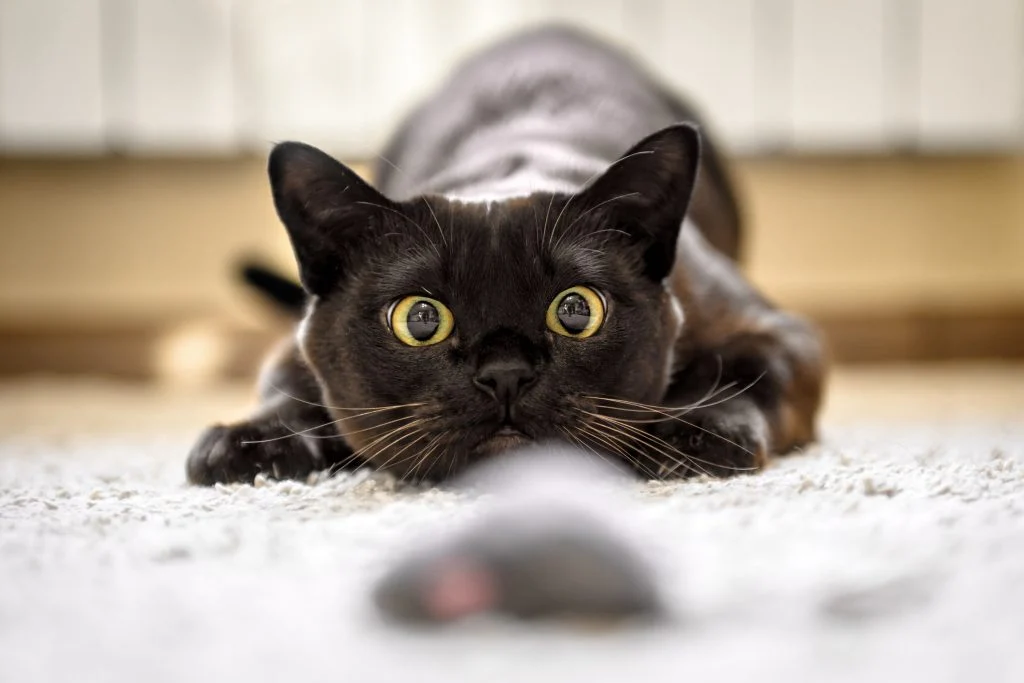
The Silent Stalker
When your cat crouches low, tail twitching and eyes dilated, they’re channeling behaviors used to hunt ground-dwelling prey. This methodical approach, characterized by slow movements punctuated by sudden bursts of speed, mimics how cats would hunt mice or small birds. If your cat excels at this style, they’re displaying exceptional patience and calculated precision.
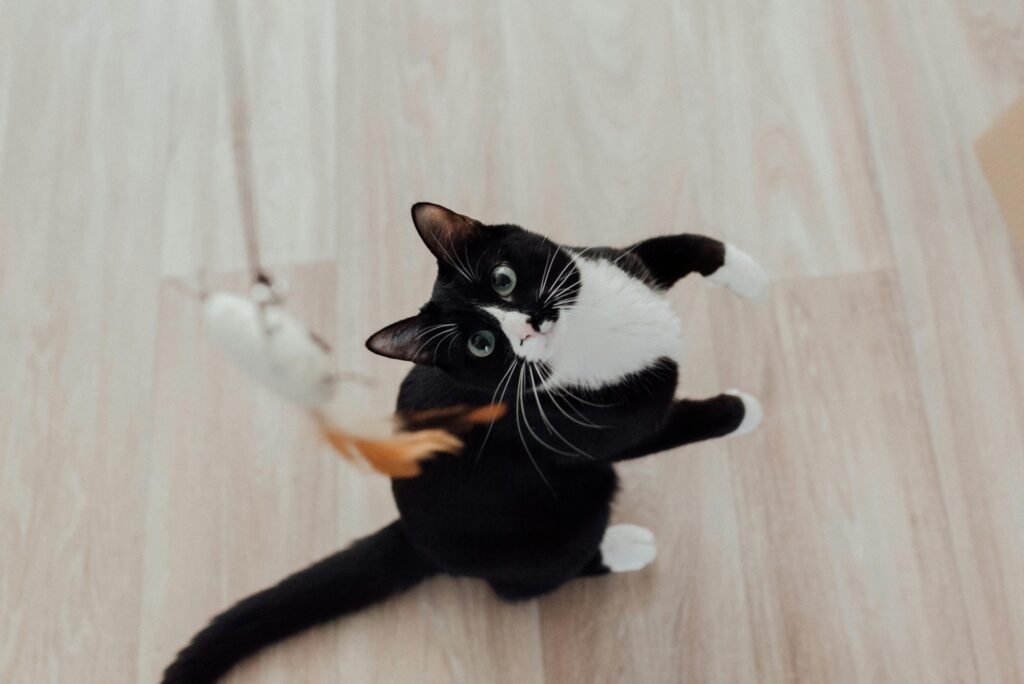
The Aerial Acrobat
Some cats prefer vertical space, batting at toys above their heads or leaping impressive heights to catch flying objects. This play style correlates with hunting birds or insects, requiring split-second timing and remarkable agility. These cats often excel at catching toys mid-air and may benefit from wand toys that mimic flying prey.
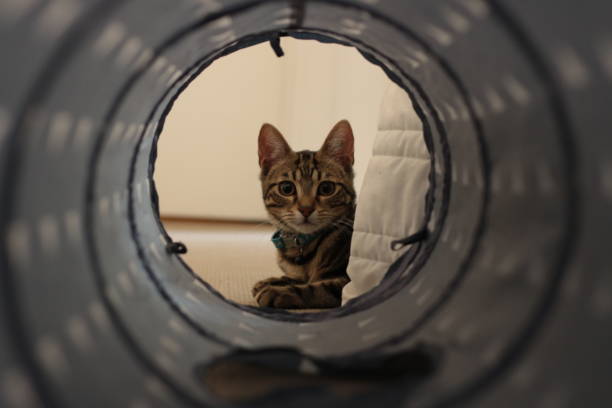
The Opportunistic Hunter Some cats excel at the art of minimal effort for maximum reward—waiting patiently on their haunches until prey comes within perfect striking distance before making a precise, well-timed grab. While this might appear “lazy” to human observers, it actually demonstrates sophisticated hunting strategy: energy conservation combined with excellent timing and spatial awareness.
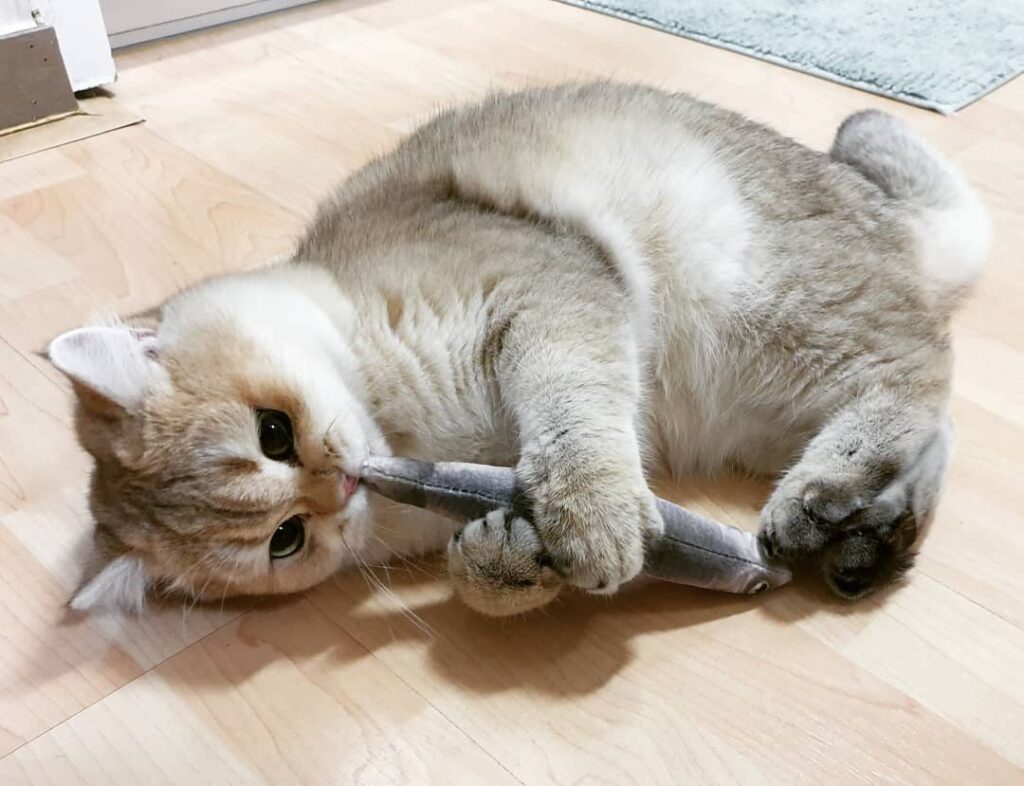
The Wrestler
When cats grab toys with their front paws while kicking with their back legs, they’re practicing a crucial survival skill—the “rabbit kick” that would help them subdue larger prey while protecting their vulnerable belly. This style shows confidence and physical strength.
The Evolution of Play: From Kitten to Senior
Play behavior naturally evolves as cats age, each stage serving different developmental purposes:
- Kitten Stage (2-6 months): Play is crucial for developing motor skills and social boundaries. Kittens will play with anything and everything, learning through trial and error.
- Adolescent Stage (6-18 months): Play becomes more refined and targeted. Cats develop preferred styles and show increased strategic thinking in their approach.
- Adult Stage (2-10 years): Play sessions become shorter but more intense, with clearer hunting patterns emerging.
- Senior Stage (10+ years): While energy levels decrease, mental engagement remains important. Play sessions shift toward gentler interactions focused on mental stimulation.
Play vs. Aggression: Reading the Signs
One of the most common misconceptions among cat owners is misinterpreting aggressive behavior as play. Here’s how to tell the difference:
Playful Behavior Indicators:
- Relaxed ear position
- Silent or soft chirping sounds
- Pauses between actions
- Retracted claws (mostly)
- Rolling over voluntarily
- Returning for more interaction
Signs of Aggression:
- Flattened ears
- Growling or hissing
- Tail lashing (versus playful twitching)
- Fully extended claws
- Dilated pupils with tense body posture
- No pauses in attack behavior
Crafting the Perfect Play Session
Understanding your cat’s natural play style allows you to create more engaging and fulfilling play experiences:
- Match the Toy to the Style
Choose toys that complement your cat’s preferred hunting style. Stalkers might prefer toy mice or small balls, while aerial acrobats may favor wand toys with feathers. - Time it Right
Most cats are crepuscular, meaning they’re most active at dawn and dusk. Schedule play sessions during these natural energy peaks for maximum engagement. - Create a Hunting Experience
Allow your cat to stalk, chase, and eventually “catch” their prey. Letting them win is crucial for satisfaction and confidence building. - Rotate Toys
Keep toys fresh and exciting by rotating them every few days. This prevents boredom and maintains the novelty factor that triggers hunting instincts.
Multi-Cat Play Dynamics: The Dance of Chase and Be Chased
When you have multiple cats, their play interactions offer a fascinating glimpse into feline social dynamics. Healthy play between cats involves a complex series of behaviors that maintain balance and mutual enjoyment:
The Role-Swapping Game Healthy cat play involves frequent role reversals—the chaser becomes the chased, and vice versa. This turn-taking behavior is crucial for maintaining social harmony and ensuring neither cat feels threatened. Watch for:
- Frequent pauses where cats switch positions
- Mutual invitations to continue playing (rolling over, pawing at each other playfully)
- Equal initiation of chase sequences from both cats
- Relaxed body language even during high-energy chases
Social Play Signals Cats use specific body language to communicate “this is just play” to their companions:
- Side-rolling during chase breaks
- Play-bows (similar to dogs, but more subtle)
- Exaggerated movements and prancing
- Tails held high with a playful crook at the end
- Soft chirps or trills rather than aggressive vocalizations
Warning Signs in Multi-Cat Play While wrestling and chasing are normal, watch for signs that play is becoming one-sided or aggressive:
- One cat consistently hiding or trying to escape
- Chasing that ends in real fights
- No role reversal—the same cat always pursues
- Loud vocalizations (growling, hissing)
- One cat preventing the other from leaving by blocking doorways
- Stalking behavior that lacks playful signals
Facilitating Healthy Multi-Cat Play To encourage positive play interactions between cats:
- Provide multiple escape routes and vertical spaces
- Have enough toys for all cats to prevent resource guarding
- Create environmental enrichment that allows for natural chase circuits
- Never force interactions—let cats establish their own play preferences
- Intervene if play becomes too intense by redirecting attention with toys
When Play Goes Wrong: Reading Your Cat’s Stop Signs
Respecting your cat’s boundaries is crucial for maintaining a healthy play relationship. Watch for these signs that your cat needs a break:
- Tail becoming increasingly active or puffed up
- Walking away or hiding
- Skin rippling along the back
- Looking around frantically
- Excessive grooming during play
- Charging at you with ears back
Remember, force-free interactions are essential for building trust and ensuring play remains a positive experience for both you and your cat.
Conclusion
By understanding the subtle language of cat play, we can better meet our feline friends’ physical and psychological needs. Whether your cat is a methodical stalker or an energetic acrobat, their play style offers valuable insights into their personality and natural instincts. Use this knowledge to create enriching play experiences that strengthen your bond while honoring their wild heritage.