
When the Family Leaves: What First-Time Pet Sitting Can Reveal
Why even confident dogs can behave differently during their first pet sit
For the vast majority of dogs I care for, pet sitting works brilliantly. One of the biggest advantages of in-home pet sitting is that the dog remains in the environment they know best. Their bed is still there, their garden smells the same, their usual walking routes are familiar, their food is in the same cupboard and their favourite sleeping spots have not changed.
My role as a pet sitter is to preserve as much of that normality as possible. Before a sit, I learn the dog’s usual routine, including when they eat, when they walk, where they sleep, what they enjoy doing and the small household habits that matter to them. I keep the first day deliberately calm, allow interactions to happen largely on the dog’s terms and avoid expecting them to immediately behave as though nothing has changed.
If they want contact, I am there. If they want to watch me from the other side of the room while they work out why I am still in their house, that is fine too. Walks, meals, bedtime and other predictable events stay as close to normal as possible.
For most dogs, this works extremely well.
What settling into a pet sit usually looks like
Even dogs I walk routinely every week often go through a fairly predictable adjustment period when I first pet sit them. They know me well, happily leave the house with me for walks and may have spent hundreds of hours in my company, but there is still a significant difference between, “my dog walker is here”, and, “my family have disappeared and my dog walker appears to have moved in”.
That first day can therefore involve some uncertainty. A dog who is usually completely relaxed around me might follow me between rooms, watch me more closely than usual, check doors or windows, struggle to settle as deeply as they normally would or simply seem to be waiting for their family to come home.
They are not necessarily distressed. They are gathering information.
This is why I stay calm, available and predictable rather than trying to force reassurance onto them. I do not insist on cuddles or constant interaction because I think they need distracting. I simply continue their day as normally as I can and allow them to work out what this new arrangement means.
Something I see again and again is the difference one night’s sleep can make.
By that point, the dog has experienced an entire day. Their walk still happened. Their food appeared. The evening came and went. Their bedtime routine happened. I remained calm, nothing unpredictable occurred and, eventually, everyone went to sleep.
Then they wake up the following morning and their world is still intact.
They are still in their own home. Breakfast still happens. Their morning routine begins. I am still there, they are still safe and they have successfully made it through their first night without their family.
For many dogs, this is the moment the uncertainty seems to disappear completely. The dog who spent the previous evening monitoring every movement is suddenly asleep beside me. The one who was not quite sure whether I belonged there is bringing me toys. They have worked out the arrangement and, from then onwards, we are usually best mates.
That is the normal process I expect to see.
The first day is about information gathering, followed by increasing predictability, a good night’s sleep and then a noticeable reduction in arousal once the dog understands that their needs will still be met.
Occasionally, though, a dog does not follow that familiar pattern.
A first-time pet sitting case study
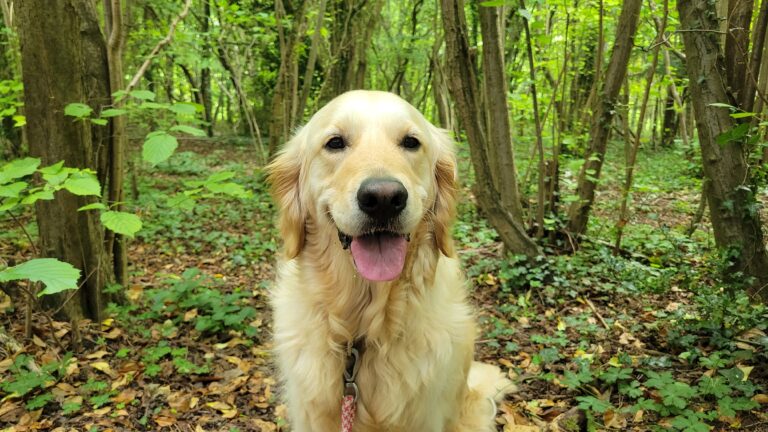
Recently, I began a week-long pet sit with a Golden Retriever who had never previously had a pet sitter. On paper, there was very little to suggest the transition would be particularly difficult. He was not considered a nervous dog, had met me previously and was friendly, sociable and affectionate.
As I would with any pet sit, the first day was kept quiet and low pressure. His care routine was followed as closely as possible, he was given plenty of opportunity to sleep and interactions were allowed to happen largely on his terms.
As the day progressed, however, it became increasingly clear that there was something unusual about his routine.
It did not really belong to him.
It belonged to his family.
When the dog’s routine is actually the family’s routine
Some dogs have extremely obvious routines of their own. They wake up and ask for breakfast. They know when their walk is due. At a certain point in the evening they start appearing hopefully in the kitchen because dinner is, according to them, several years late.
Those routines are relatively easy for a pet sitter to reproduce. The people may have changed, but many of the events predicting what happens next can remain exactly the same.
Other dogs are much more embedded within the rhythms of the household.
This dog was one of them.
At around 3pm, for example, he began to seem a little lost. Nothing was dramatically wrong and he was not displaying obvious distress, but there was a noticeable change in him, as though he knew something should be happening but could not work out what.
Normally, around that time, the children in the family would take him into the garden to play.
They were part of the routine.
Eating was similar. His usual feeding information suggested that food should be offered at particular times, but simply putting his bowl down at those times did not recreate his normal experience. He usually eats when the whole family sits together at the dining table. The family eating is part of his cue to eat.
Without them there, his food intake dropped considerably.
The food was the same. His bowl was the same. His home was the same. What had disappeared was the context that normally told him what that part of the day meant.
That distinction became incredibly important.
A familiar house can still feel unfamiliar
We tend to think about routine in terms of a timetable. Breakfast at seven, walk at nine, play in the afternoon, dinner in the evening.
Dogs do not experience routine as a written schedule, though. They learn patterns and predictors.
The sound of someone coming downstairs, children returning home, a particular person putting their shoes on, the family gathering around the table or someone opening the back door at roughly the same point every afternoon can all become part of the dog’s understanding of what happens next.
When the family leaves, many of those little predictors disappear at the same time.
This means a dog can remain in exactly the same house while their experience of that house changes significantly. Their usual people do not come home. Someone else is moving around the property, responding differently to their communication, handling the evening routine and appearing at bedtime.
For most dogs, this change is manageable. The usual pattern I see, some uncertainty followed by rapid settling once the dog has experienced a predictable day and night, is testament to how adaptable they can be.
But even a confident dog can become stressed when enough familiar pieces disappear at once.
Stress can change behaviour
During the first day of this particular sit, the dog slept very little and barely touched his breakfast. Those details mattered because they suggested he was not following the usual settling pattern I see in so many of my pet-sitting clients.
Later, he picked up a food wrapper.
Taking inappropriate objects had not previously been presented as a significant concern, and his normal responses around items he should not have were not considered worrying. When I attempted to gently assess whether I could handle around his muzzle and safely remove any remaining pieces, however, his behaviour escalated extremely quickly and he bit me.
It was a significant bite requiring medical treatment.
It would be very easy to look at that incident in isolation and reduce it to a simple sequence. Dog steals wrapper, person tries to remove it, dog bites.
Behaviour rarely makes sense when we remove everything that happened before it.
By that point, this was a dog experiencing his first ever overnight pet sit. His family were absent from all of the patterns that normally structured his day, he had eaten very little, slept very little and appeared unsure about some of the usual events within his routine.
He was then in possession of something potentially valuable while a comparatively unfamiliar caregiver interfered physically around that resource.
None of this excuses the bite, nor does understanding the behaviour minimise its consequences. It does, however, help explain why his response in that moment may have looked dramatically different from anything his family had previously experienced.
The circumstances had changed, and behaviour changes with circumstances.
“But he’s never done that before”
This is one of the most important things for anyone considering pet sitting to understand.
Owners can only tell us about the dog they know in situations that dog has already experienced. If a dog has never spent the night at home with a pet sitter while their family are away, nobody has behavioural history for that exact situation.
“He’s never guarded anything from us.”
“He always lets me take things out of his mouth.”
“She sleeps perfectly through the night.”
“He eats anything.”
“She loves absolutely everyone.”
All of those things can be completely true.
They are still descriptions of the dog within their usual context.
A dog who happily gives an object to their owner may feel differently about somebody else taking it. A dog who always eats enthusiastically may struggle when the social cues surrounding their meals disappear. A dog who normally sleeps all afternoon may stay awake because they are listening for their family to come home.
Even seeing a dog several times every week does not completely prepare us for this.
A dog can know and trust their walker extremely well while never having experienced that person replacing their family within the home for a full day and night. Familiarity with the person and familiarity with the situation are two separate things.
Dogs do not always climb a neat ladder
We often explain escalating behaviour as though dogs move through a predictable sequence. Mild discomfort becomes avoidance, avoidance becomes freezing or growling, then snapping, then biting.
It is a useful teaching model, but real behaviour is not always that tidy.
When a dog’s overall stress load is elevated, the distance between those responses can become much smaller. Earlier signals may be brief, subtle or different from the behaviours owners normally recognise from their dog, and sometimes escalation happens incredibly quickly.
That does not necessarily mean the dog has suddenly “become aggressive”.
It means the behaviour needs to be considered within the context in which it occurred.
Nervous dogs often get better preparation
Interestingly, some of the dogs we are best prepared for are the ones whose owners already know they struggle.
Owners of nervous dogs often automatically ask for several drop-in visits, walks together or shorter practice sits before committing to a longer booking. They already understand that their dog needs time to acclimatise and that familiarity should be built gradually.
Their dog has taught them to think about transitions.
By the time a longer pet sit happens, that dog may already have experienced the sitter entering the house repeatedly, going for walks with them, providing care without the owner immediately beside them and perhaps completing a short or overnight sit successfully.
We therefore have considerably more information.
Owners of confident dogs understandably do not always think to ask for the same preparation.
Why would they?
If your dog loves visitors, happily greets new people, copes well when you leave the house and has never shown any significant behavioural concerns, arranging several practice sessions before your holiday can seem unnecessary.
If their sitter already walks them every week, it may seem even less important. Surely they already know each other?
They do.
But meeting a pet sitter, going for a walk with a pet sitter and living with that person after your family has disappeared are very different experiences.
An overnight stay tells us things that a meet and greet, or even months of regular dog walks, simply cannot.
Why trial pet sits will now form part of the process
This experience has changed one aspect of how first-time pet-sitting clients will be managed.
Previously, gradual familiarisation was something I particularly encouraged for dogs described as nervous, anxious or slow to warm up.
Going forward, confidence alone will not be considered a reason to skip that process.
Before a longer first-time pet sit, dogs will need some experience of being cared for by the team while their family are absent. Depending on the individual dog, this may involve a drop-in visit, walks or care visits without the owner present, a shorter pet sit and an overnight stay before progressing to a longer booking.
This is not because I expect dogs to behave dangerously.
Quite the opposite.
The vast majority of dogs are wonderful to pet sit, and for many of them that first overnight gives them exactly the information they need. They experience the sitter remaining in the house, discover that their needs are still met, sleep, wake up and realise that life continues exactly as expected.
The next time it happens, pet sitting is no longer completely novel.
A trial simply gives us the opportunity to discover the things neither the sitter nor the owner could otherwise know. Does the dog eat when their family are away? Can they settle and sleep? Do they spend all evening listening for the front door? Is their routine genuinely their own, or is it dependent on cues from particular family members? Does their behaviour around possessions, food or handling change?
Perhaps most importantly, what do they look like the following morning once they have experienced a full day and night?
For many dogs, the answer is that they wake up completely settled.
For others, we learn that they need a little more preparation.
Both outcomes are useful when we discover them during a short trial rather than on the first day of a week-long booking.
Pet sitting is about more than keeping the timetable
Good pet sitting is not simply turning up at the correct time, filling a food bowl and completing a walk.
It is about trying to preserve the parts of an animal’s life that make their world predictable while accepting that we can never completely recreate their family.
Sometimes we only discover how important a tiny part of that routine was when it disappears.
The purpose of sharing this case study is not to frighten people away from pet sitting. For many dogs, remaining in their own home with individual care is an excellent option, and the overwhelming majority of the dogs I care for settle beautifully.
In fact, one of my favourite parts of pet sitting is watching that transition happen. The slightly uncertain dog on day one watches, learns and works out the new arrangement. They sleep, wake up, discover their routine continues and realise they are safe.
Suddenly I am no longer the suspicious person who has inexplicably outstayed a normal dog walk.
I am their temporary person, and everything is fine.
That is the usual story.
This case study is simply about understanding why, occasionally, it isn’t.
A dog does not have to be a “nervous dog” to feel nervous when something completely new happens, and previous behaviour can only tell us how a dog has responded to circumstances they have already experienced.
A short trial gives the dog the opportunity to learn what pet sitting means, gives the sitter the chance to understand that dog without immediately facing the pressure of a week-long booking, and gives the owner much more meaningful reassurance than simply knowing their dog was friendly when they met the person caring for them.
Sometimes the best preparation is not predicting a problem.
It is simply giving the dog the chance to experience something new on a small scale before asking them to cope with it for a week.