Beyond Sit and Stay: Surprising Things You Didn’t Know You Needed to Teach Your Dog
We all know the basics of dog training – sit, stay, come, and lie down. But in my years of working with dogs, I’ve discovered that some of the most crucial skills we need to teach often go completely overlooked. These fundamental abilities can transform your dog’s quality of life and strengthen your bond in ways that traditional obedience training can’t match.
This guide promotes force-free, reward-based training methods only. I do not endorse or condone the use of aversive equipment or methods including but not limited to: prong collars, shock/e-collars, check chains, alpha rolling, physical corrections, spray collars, or any form of punishment or intimidation. These methods can damage your relationship with your dog and create fear, anxiety and aggressive responses.
For support with these training processes, consult an ABTC-registered behaviourist or qualified trainer to ensure safe and effective implementation
1. Teaching Your Dog to Be Comfortable With Their Thoughts
While we often focus on keeping our dogs entertained, teaching them to be comfortable doing nothing is perhaps one of the most valuable skills they can learn. Many behavioural issues stem from dogs who never learned to settle and self-regulate. This goes beyond basic stay commands – it’s about teaching them emotional independence.
Start by rewarding calm behaviour when your dog chooses to settle. Don’t command them to stay as this is not a demonstration of calm and settled behaviour. Instead, catch and reward moments when they naturally choose to relax. Gradually increase the duration between rewards, teaching them that calm behaviour is inherently valuable. This helps prevent:
- Attention-seeking behaviours
- Separation anxiety
- Destructive behaviours from boredom
- Over-attachment to owners
2. Gentle Mouth Skills
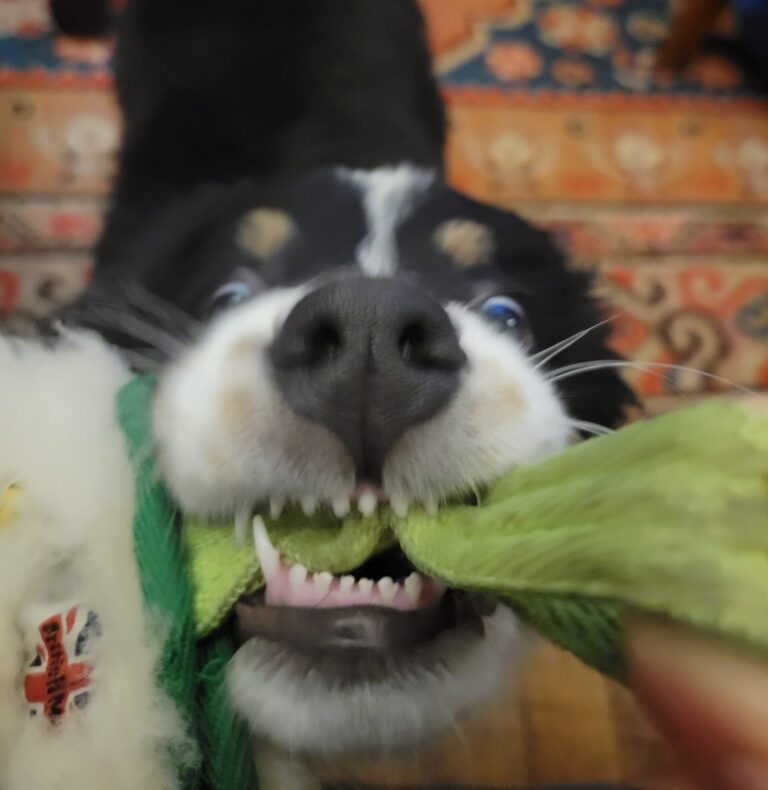
Teaching bite inhibition and gentle mouth skills is crucial even for adult dogs who don’t bite. This fundamental skill affects every interaction your dog has with the world through their mouth.
Practise:
- Taking treats gently
- Appropriate toy play pressure
- Gentle mouthing during play
- Dropping items on command
Start with offering treats in a closed fist, only releasing when they use gentle nose touches rather than teeth. This helps them:
- Handle grooming better
- Play more appropriately
- Take treats safely
- Interact more gently with the world
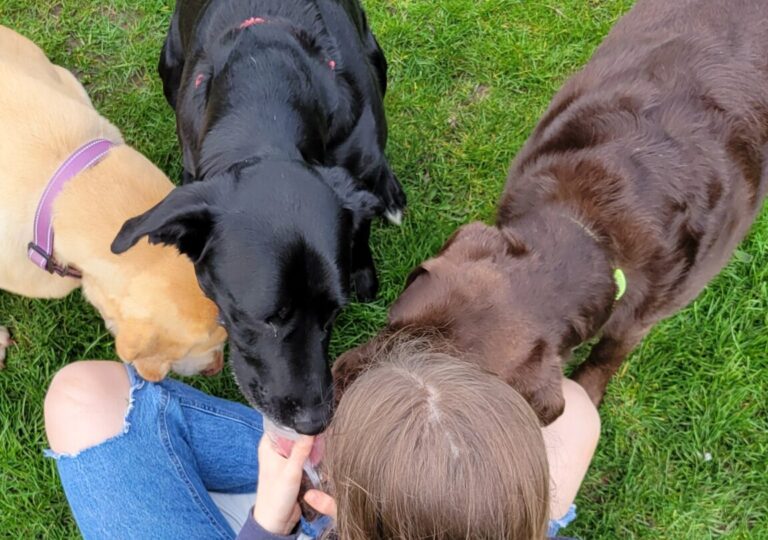
3. Handling Unexpected Touch
Dogs need to be comfortable or at least tolerate unexpected handling for their safety and the safety of others. This goes beyond basic grooming acceptance to include:
- Sudden veterinary examinations
- Accidental contact from strangers
- Emergency medical handling
- Children’s unpredictable movements
Practise by:
- Randomly touching different body parts throughout the day
- Pairing touches with high-value rewards
- Varying touch pressure and duration
- Handling in different positions
- Including handling during play and rest
Although some areas may remain sensitive for your dog, teaching them to accept handling through gentle, reward-based training ensures they can cope with essential medical care when needed.
4. Spatial Awareness and Body Control
Dogs don’t naturally understand personal space or how to navigate their environment efficiently. Teaching spatial awareness prevents accidents and builds confidence in tight spaces.
Work on:
- Walking through narrow spaces calmly
- Navigating around furniture without bumping
- Understanding personal space boundaries
- Moving backwards and sideways safely
- Proper lead navigation around obstacles
Create simple obstacle courses in your home or garden and reward careful navigation. This prevents:
- Lead pulling around corners
- Crashing into people or objects
- Door-rushing behaviours
- Crowding in tight spaces
Remember that while teaching spatial awareness is important for safety, dogs naturally explore their environment in swooping, meandering patterns – and that’s exactly as it should be! We’re not aiming to create robots who walk in perfect straight lines. The goal is simply to help them understand how to navigate tricky spaces safely when needed, whilst still allowing them to be dogs, sniff where they please, and move in their natural, wonderfully unpredictable ways. This training is about adding skills to their repertoire, not restricting their natural movement patterns or dampening their joyful exploration of the world.
5. The Art of Active Sniffing
It might sound strange, but many dogs need to be taught how to use their nose effectively. While they naturally have very strong senses of smell, teaching them to actively search and explore with purpose provides crucial mental stimulation and builds confidence. This skill development includes:
- Starting with simple “find it” games using treats or toys in plain sight
- Gradually increasing the search area and difficulty
- Teaching systematic searching patterns
- Building duration and focus during sniffing activities
- Using scatter feeding to encourage natural foraging behaviours
Begin by dropping treats or even favourite toys in a small area while saying “find it.” Gradually increase the spread and add different surfaces and heights. This teaches your dog to:
- Use their nose intentionally
- Problem-solve independently
- Build confidence in new environments
- Develop focus and concentration
- Satisfy natural foraging instincts
6. The Importance of Learning How to Play
Surprisingly, play doesn’t always come naturally to dogs. While some dogs instinctively know how to play with toys, many need to be taught how to engage in interactive play with humans and how to entertain themselves. This crucial skill affects their overall wellbeing and ability to cope with daily life.
Teaching play involves:
- Starting with short, engaging sessions using exciting movements and tone
- Teaching them to bring toys back (not just chase them)
- Showing them how to play independently with toys
- Building excitement for different types of toys (Rotation of toys)
- Teaching appropriate play intensity and self-control
Begin with toys on strings to make them more exciting and directly interactive, then gradually transition to toys like balls, chews, and throwers. Reward any interaction with toys, even just looking at them initially. This helps dogs:
- Develop healthy stress relief outlets
- Build confidence with new objects
- Further learn to self-entertain
- Bond appropriately with their owners
- Understand toy boundaries
7. Recovery from Excitement
Teaching dogs to calm down after excitement is often more valuable than preventing excitement altogether. This skill helps them develop emotional regulation and self-control, which is crucial for daily life.
Practice “excitement and calm” exercises:
- Create brief, controlled exciting moments
- Reward the transition back to calmness
- Gradually increase excitement levels
- Practise in different environments
- Include recovery during play sessions
This teaches them to:
- Return to a calm state after stimulation
- Handle exciting situations better
- Maintain self-control during high-energy activities
- Understand when it’s time to settle
Conclusion
These often-overlooked skills form the foundation of a well-adjusted, confident dog. While they might seem basic or obvious, they require intentional teaching and consistent practise. Remember that training these skills should always be positive and patient – rushing can create anxiety or resistance.
Start with short training sessions focused on one skill at a time. Watch for signs that your dog is enjoying the learning process, and always end on a positive note. Quality over quantity.
These investments in your dog’s fundamental skills will pay dividends in their behaviour, confidence, and your relationship for years to come.
Remember, every dog learns at their own pace, and that’s okay. The goal isn’t perfection but rather progress and building a strong foundation for a happy, well-adjusted companion.